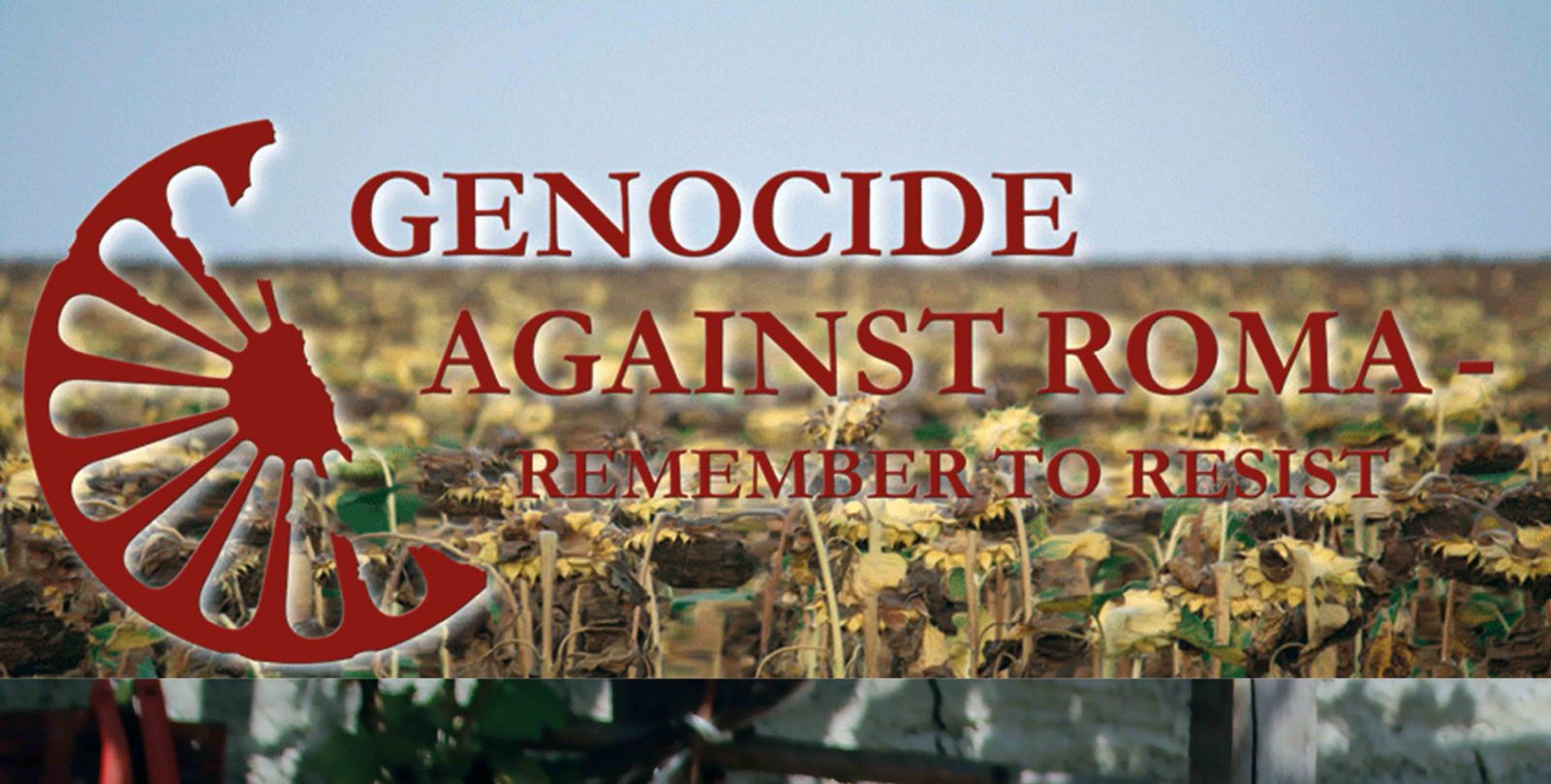
Exhibition on the genocide of Roma in Transnistria
During 2015-2016 the German organization Bildungswerk für Friedensarbeit (Education for cooperation) was carrying out a project focused on the history of Roma genocide in the so called “Transnistria” – the region between the Dniester and the Southern Bug rivers that was occupied by Romania during the Second World War.
The group of young people, Roma and non-Roma, from Ukraine, Moldova, Germany and Romania visited places in Southern Ukraine, where Roma deported from Romania, Bessarabia and Bukovyna found themselves in 1942-1944. Many of those Roma died of starvation, epidemics and humiliation from local authorities, sometimes – of intentional mass killings. Participants of the trip also met Roma who managed to survive the genocide and local non-Roma citizens who witnessed what happened to people doomed to die. The result of the project is an exhibition that perfectly combines different dimensions of this tragic event and its meaning for today.
Ukrainian Center for Holocaust Studies took part in preparing and editing the Ukrainian and Russian versions of the exhibition. With the organizers’ kind permission, the exhibition is located on “The Genocide of Roma (Gypsies) during the occupation of Ukraine (1941-1944): Research, Teaching, and Commemoration” website. It is made for everyone interested in this subject, especially Ukrainian Roma, and for scholars, teachers and people who are interested in Roma history on the territories of Ukraine during the Second World War.
Announcements
MoreLatest News
-
Bulletin «Lessons of the Holocaust», № 1 (85), 2026
Dear colleagues! The fresh issue of information-pedagogical bulletin of UCHS «Lessons of the Holocaust», № 1 (85), January-March, 2026 has been published.
[More] -
Public Discussion: “The Call: Rethinking Ukrainian Jewry”
On April 10, 2026, a discussion was held at the Sens bookstore in Kyiv, organized by Hromadske Radio in partnership with UNESCO Ukraine. The event explored the history of Ukrainian-Jewish relations, cultural influences, shared traumas, and identity formation.
[More] -
Cleaning Stumbling Stones in Kyiv
On April 4, 2026, the first cleaning of Stumbling Stones this year took place in Kyiv. Twelve participants joined the action within the memorial project One Stone - One Life. 80 Stumbling Stones for Kyiv.
[More] -
TOLI Impact Grants 2024–2025: International Report Published
The Ukrainian Center for Holocaust Studies warmly congratulates the teachers who implemented projects during the 2024-2025 academic year within the framework of the TOLI Impact Grants. Altogether, 168 educators from across Europe took part in this transformative process, bringing Holocaust and human rights education into their classrooms.
[More] -
Open Lecture at the Donetsk Regional Institute of Postgraduate Pedagogical Education
On April 2, 2026, an online lecture was held in Kramatorsk as part of the series “Historical Education for All. Myths and Facts: Between Legend and Reality.”
[More]