Home

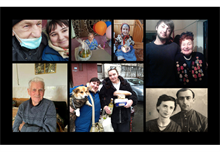
The Ukrainian Righteous Among the Nations are braving the war but need help

insidethegatesThe Ukrainian Righteous Among the Nations, like the majority of Ukrainians, face challenges and difficulties that arose as a result of russia's aggression against Ukraine. More than 40 families of Ukrainian Righteous Among the Nations refused to leave the territory of Ukraine during the war.

However, how do they live today, you can find out in Margarita Ormotsadze's article at the link:

Full text

Latest News

  • Exhibition “(No) Children’s Stories” in Kovel

    After its run in Kyiv in April, the exhibition (No) Children’s Stories will be hosted in Kovel from May 5 to 22, 2026. Created by the Ukrainian Center for Holocaust Studies with support from the international project Paths of Memory III.

    [More]
  • International Educational Seminar in Krakow

    On April 24-26, 2026, the first part of the international educational project The Holocaust as a Starting Point: Ukrainian-Polish Dialogue took place in Krakow. The event was organized by the Shoah Memorial  (Paris) in partnership with the Ukrainian Center for Holocaust Studies (Kyiv) and ORE (Warsaw). Ukraine was represented by 20 history and social studies teachers from 14 regions of the country.

    [More]
  • Workshop for Educators of Cherkasy Region

    On April 13, 2026, history teacher from Cherkasy Halyna Korniienko, trainer and staff member of the Ukrainian Center for Holocaust Studies, held a workshop for educators of the Cherkasy region.

    [More]
  • Bulletin «Lessons of the Holocaust», № 1 (85), 2026

    Dear colleagues! The fresh issue of information-pedagogical bulletin of UCHS «Lessons of the Holocaust», № 1 (85), January-March, 2026 has been published.

    [More]
  • Public Discussion: “The Call: Rethinking Ukrainian Jewry”

    On April 10, 2026, a discussion was held at the Sens bookstore in Kyiv, organized by Hromadske Radio in partnership with UNESCO Ukraine. The event explored the history of Ukrainian-Jewish relations, cultural influences, shared traumas, and identity formation.

    [More]
More

Top